A vendor tells you their new AI agent will handle customer follow-up, book appointments, and update your CRM without a human touching any of it. It sounds like exactly what a stretched small business needs. Then you ask what happens when a customer says something outside the script, and the answer gets vague fast.
That gap between the pitch and the reality is the real story of agentic AI in 2026. The term shows up in vendor decks, tech headlines, and LinkedIn posts constantly. What it actually delivers, for a business without a dedicated engineering team, is a lot narrower than the marketing suggests. Before any budget goes toward something labeled “agentic,” it helps to understand what the word is supposed to mean, how far most tools actually are from that definition, and what to build first instead.
What “Agentic” Actually Means, And Why the Label Keeps Stretching
Most AI features already built into small business software are reactive. You ask, it answers. You give an instruction, it completes that single task, and the interaction ends there. A chatbot that drafts an email or summarizes a call falls into this category. It’s genuinely useful, but it isn’t agentic in the strict sense of the word.
An agentic system works differently. Instead of a task, you give it a goal, and it plans its own path toward that goal, choosing steps, pulling in data, and adjusting when something doesn’t go as expected, with limited human direction along the way. Salesforce, one of the companies pushing hardest into this category, describes agentic systems as ones that build and revise their own plan of action rather than simply executing a fixed instruction.
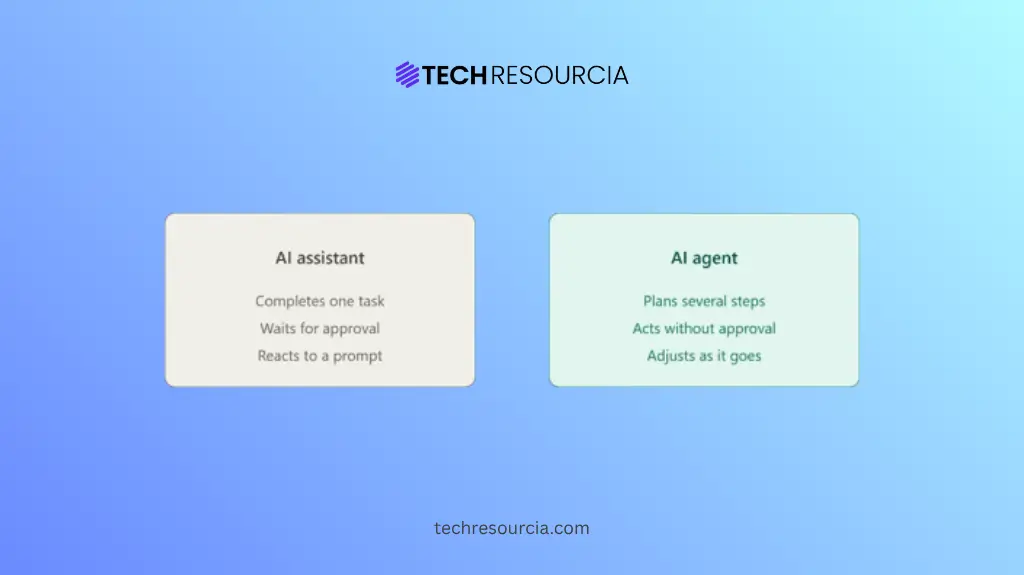
Gartner has started using a specific term for the gap between that definition and what many products actually do on the ground: agent washing. A tool that surfaces a suggestion for a person to click “approve” is an assistant, not an agent. That’s not a problem by itself, just a different category with a different price point. Real autonomy means the system carries out the next step on its own and only escalates when something genuinely requires a human. That distinction plays out differently across agentic AI tools in CRM, support, and workflow automation, where the range runs from genuine end-to-end autonomy to tools that simply renamed an existing feature.
The Gap Between Adoption and Actual Use
The adoption numbers for 2026 tell a more complicated story than the headlines suggest. Recent enterprise research found that roughly four in five companies report adopting AI agents in some form, yet only about one in nine are running them in production. That’s described as the largest deployment backlog seen in enterprise technology to date. Gartner has separately confirmed that AI agents are being embedded into enterprise software at a rapid pace, while also forecasting that over forty percent of agentic AI projects will be cancelled by the end of 2027, mostly due to unclear return on investment, rising costs, and weak governance around what the agent is allowed to touch.
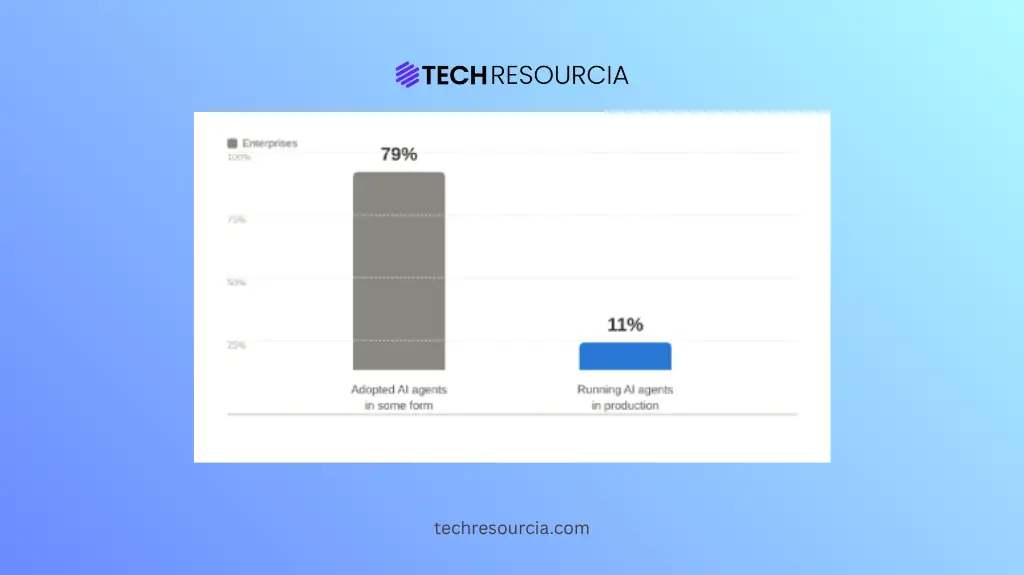
For a small business owner, that gap matters more than the growth headlines do. It means the technology genuinely delivers in narrow, well-scoped situations, and genuinely struggles the moment a business hands over broad, loosely defined operations before the groundwork is in place. The businesses getting burned aren’t usually buying bad technology. They’re buying the right technology for the wrong stage of readiness.
This is worth sitting with for a moment, because the instinct in a competitive market is to move fast and match whatever the loudest competitor claims to be doing. Agentic AI punishes that instinct more than most technology waves before it. A half-built agent that mishandles a customer complaint or misfires on a refund does more damage to a small brand’s reputation than simply waiting a quarter and doing the rollout properly the first time.
Why Structure Beats Autonomy, At Least For Now
The businesses seeing real value from AI right now generally aren’t the ones that bought the most autonomous tool on the market. They’re the ones that built a clear, repeatable workflow first, then layered automation into specific steps of that workflow one at a time.
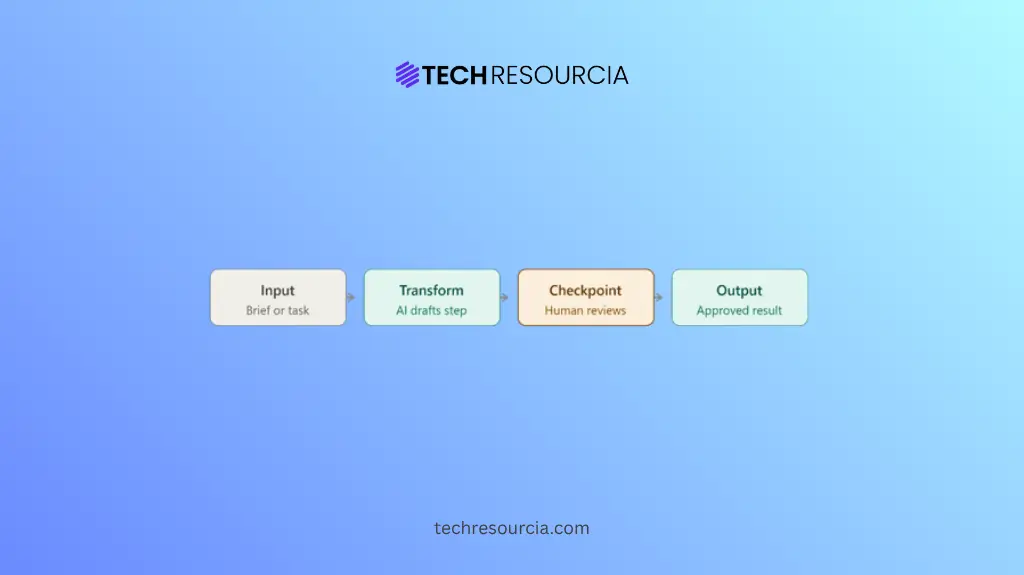
A workflow, in this sense, is a defined sequence: input, transformation, output, with a human checkpoint wherever the stakes are high enough to warrant one. That’s a far more modest ambition than “an agent that runs the business,” and it’s also the version that actually ships and holds up once real customers and real edge cases start hitting it. Once a workflow is running reliably, adding autonomy to individual steps becomes a small, contained decision instead of a leap of faith. There’s a practical AI workflow guide that lays out exactly this kind of structured, review-gated approach across content, operations, and technical tasks, and it’s worth studying before shopping for anything marketed as agentic.
What This Actually Looks Like for a Small Business
The pattern that works tends to be narrow and specific, not sweeping. A dental practice that stops losing patients because someone, or something, finally answers the phone after six in the evening. A contractor that stops losing bids because follow-up happens on schedule instead of depending on whoever remembers to make the call.
These aren’t abstractions. Automation firms working directly with small and mid-size operators, including agencies building tools like a 24/7 AI receptionist for after-hours enquiries and appointment booking, tend to frame each engagement around one measurable operational problem at a time rather than an open-ended promise to automate the whole business at once. That narrow, outcome-first framing is exactly what separates automation that survives contact with a real, messy business from automation that quietly gets abandoned three months after the demo.
Notice what’s missing from both examples: sweeping claims about replacing an entire department, or a single tool promising to run every function of the business at once. The receptionist example handles one job. The follow-up example handles one job. Each has a clear success metric attached to it before a dollar gets spent, which is precisely the discipline that gets lost the moment a pitch starts using the word “agent” to cover something much bigger and vaguer than a well-scoped task.
A Readiness Checklist Before You Buy Anything Labeled “Agentic”
A handful of questions cut through most of the noise in a sales conversation.
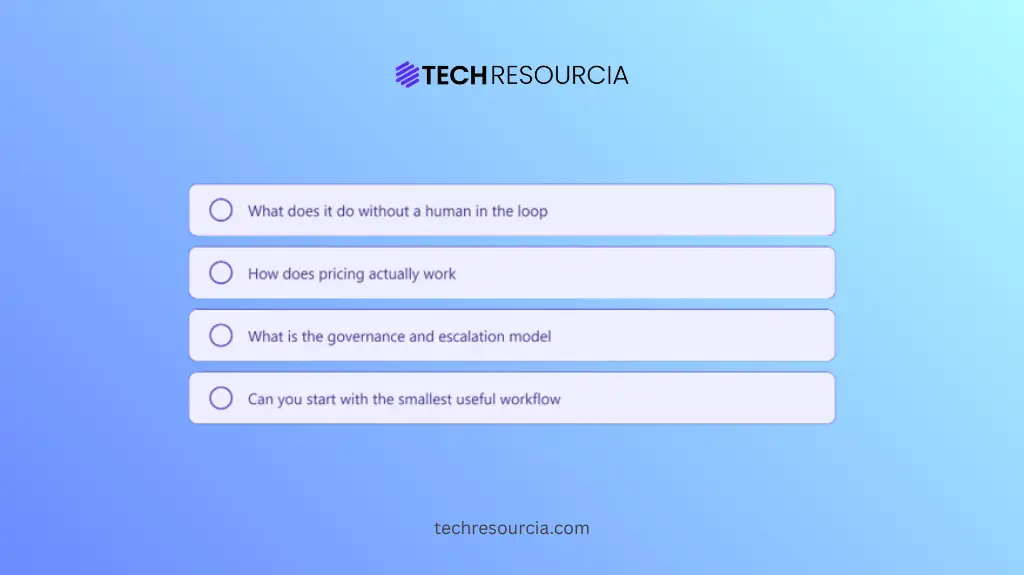
Start by asking what the system does without a human in the loop. If the honest answer is that it drafts something for a person to approve, that’s an assistant wearing agent branding. Knowing which one you’re buying changes both the price you should expect to pay and the oversight you’ll need to build around it.
Ask how pricing actually works next. Agentic tools increasingly charge per conversation, per resolved ticket, or per token rather than a flat monthly seat fee. That model can be entirely reasonable for a narrow, high-volume task and surprisingly expensive for something broad and unpredictable. Know the billing unit before anything gets signed.
Ask about governance too. What happens when the system hits a situation it wasn’t built for? Who gets notified, and how fast? What data can it reach, and what stays walled off? A vendor who can’t answer these clearly in plain language isn’t ready for a business that depends on getting this right the first time.
Finally, start with the smallest workflow that produces something genuinely useful, and prove it holds up before expanding it. That single habit is what separates the businesses seeing real, compounding returns from the roughly forty percent of agentic projects Gartner expects to be scrapped by the end of 2027.
Conclusion
Agentic AI isn’t vaporware. In narrow, well-defined situations, like ticket resolution or after-hours lead capture, it’s already delivering measurable results for businesses that scoped the problem correctly before signing anything. But a large share of the small businesses currently sitting through vendor pitches are being sold a level of autonomy that neither the underlying technology nor their own operational readiness has fully caught up to yet.
The businesses winning with AI this year generally aren’t the ones with the flashiest agent demo in the room. They’re the ones that built one solid, repeatable workflow, proved it worked under real conditions, and only then started asking how much of it could safely run without anyone watching.